 PigWars
Skin Studio
Making a skin, step by step.
Each one is cut from the pig's own body. Here is what they cover, which can be worn together, and what that means for a skin.
PigWars has six base garments. Each one is cut from the pig's own body, so it fits, bends with every animation and never pokes through the belly. A skin is a texture for one of them. This is what each garment is, what it covers and what that means for a design. All six are free to every player; the studio works on any of them.
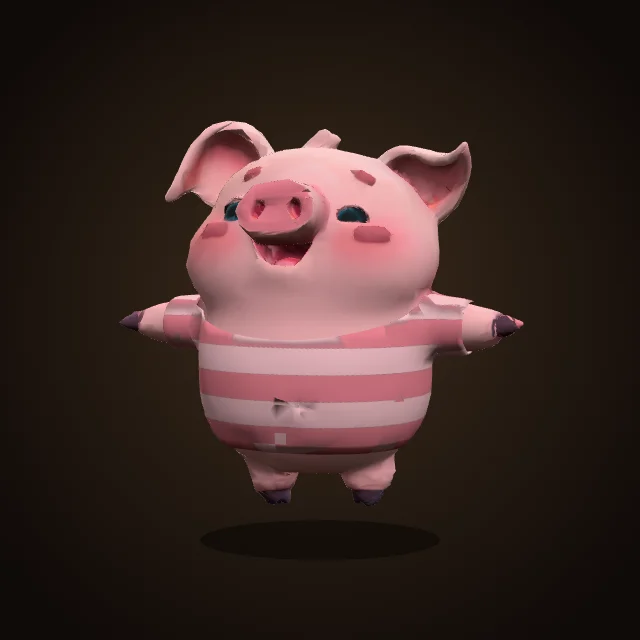
Covers: the upper body, with short sleeves and a round neck.
The easy first choice. The front and the back are big, flat and visible from the side of the battlefield, so a logo or a slogan reads well. The sleeves are short and small: put a pattern on them, not a picture.
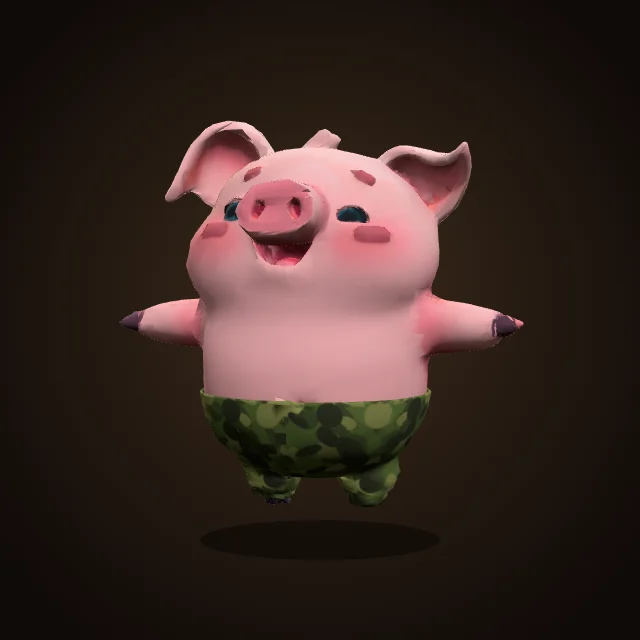
Covers: the legs from the waist to the ankles, with a gap for the tail.
Long and thin, and mostly seen from the front. Patterns are the thing here: camouflage, stripes, dots. A picture on a leg is about the size of a playing card, so keep it simple.
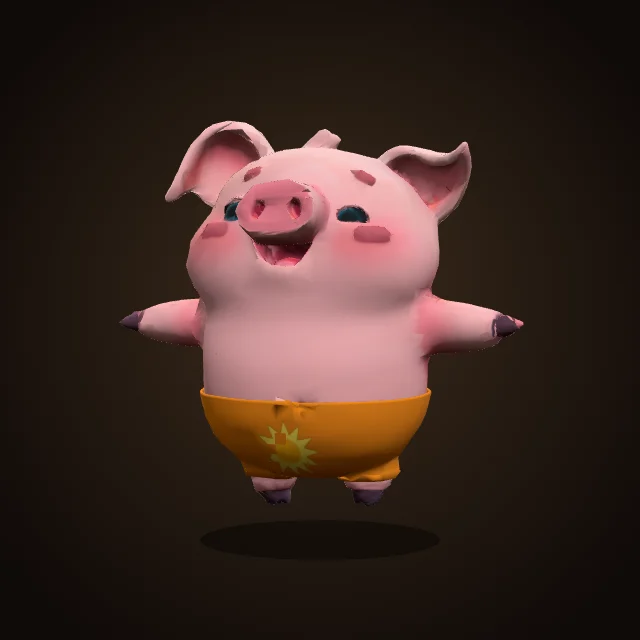
Covers: from the waist down part of the way along the legs, leaving the lower legs bare, with a gap for the tail.
Not much surface, which is the point: one bold image on the front and one on the back is a whole design. Bright colours work because most of the pig around them is pink.
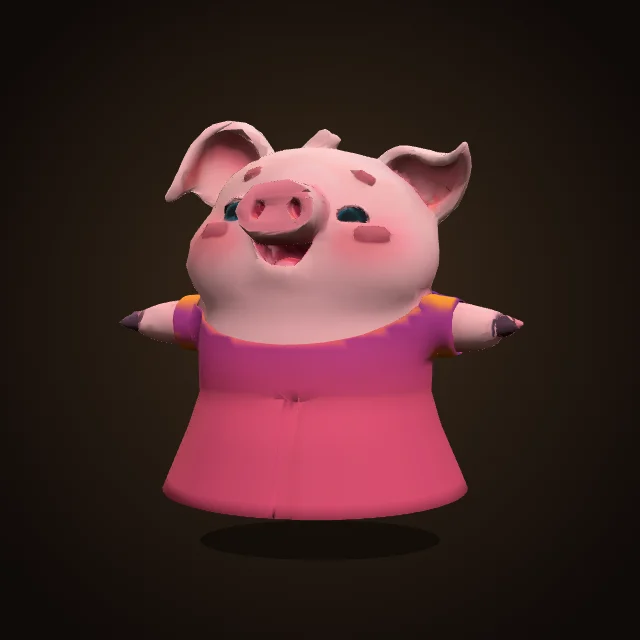
Covers: the upper body and the legs in one piece: short sleeves on top, a flared skirt below.
A dress counts as a top and as a bottom at the same time, so it takes the place of a t-shirt and of pants. The skirt is a long uninterrupted surface, which suits gradients that run from top to bottom and wide repeating patterns.
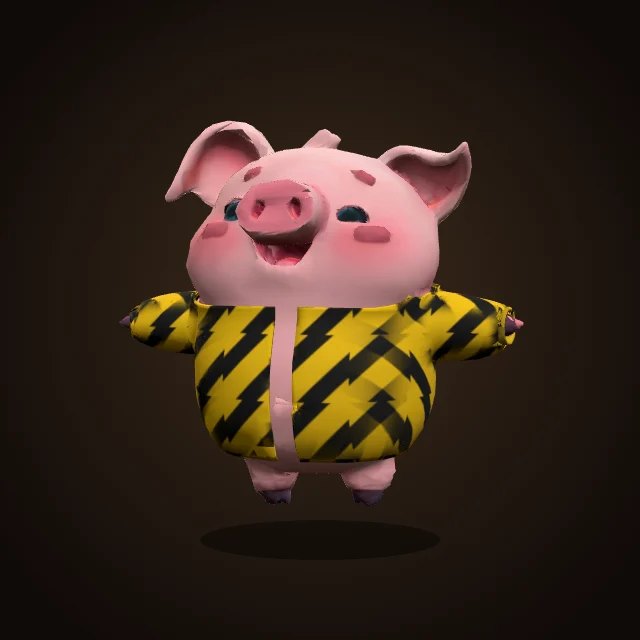
Covers: an outer layer from the hips to the neck, with long sleeves, open at the front.
The front is two halves with a gap between them, so a single image in the middle gets cut in two. Put the picture on the back instead, and use the front for a pattern. Because it is an outer layer, it goes over a t-shirt or pants rather than replacing them.
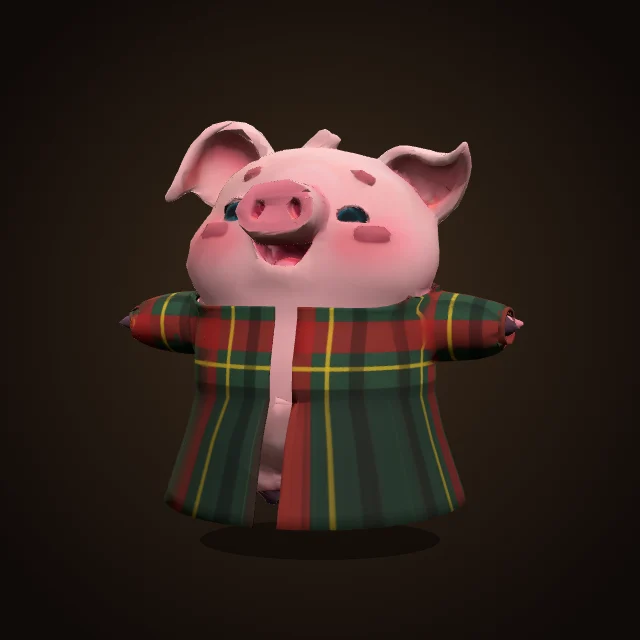
Covers: an outer layer from the neck almost to the ground, with long sleeves, open at the front and flared like a skirt.
The largest garment and the one with the biggest back. Tartan, stripes and a big image across the shoulders all work. Like the short coat it is an outer layer, so what the pig wears underneath shows at the opening.
A pig wears at most one garment on each layer: the top, the bottom and the outer layer. If you put on a second garment on a layer that is taken, the last one you chose replaces the other.
| Garment | Layer | Can be worn with |
|---|---|---|
| T-shirt | Top | Pants or shorts, and one coat |
| Pants | Bottom | A t-shirt, and one coat |
| Shorts | Bottom | A t-shirt, and one coat |
| Dress | Top and bottom | One coat only |
| Short coat | Outer | Anything except the long coat |
| Long coat | Outer | Anything except the short coat |
That means a skin is seen next to others. A dark coat hides the t-shirt under it; a bright pair of shorts looks louder under a plain t-shirt. Design the garment, then look at it in the wardrobe with the rest of the outfit, which the wardrobe guide explains.
Every garment comes in six plain colours that cost nothing. A community skin is for when a colour is not enough.
Making a skin, step by step.
How a skin maps onto a pig, and what holds up.
How a pig gets dressed in the game.
The Skin Studio is free and runs in your browser. No account needed to try it.